
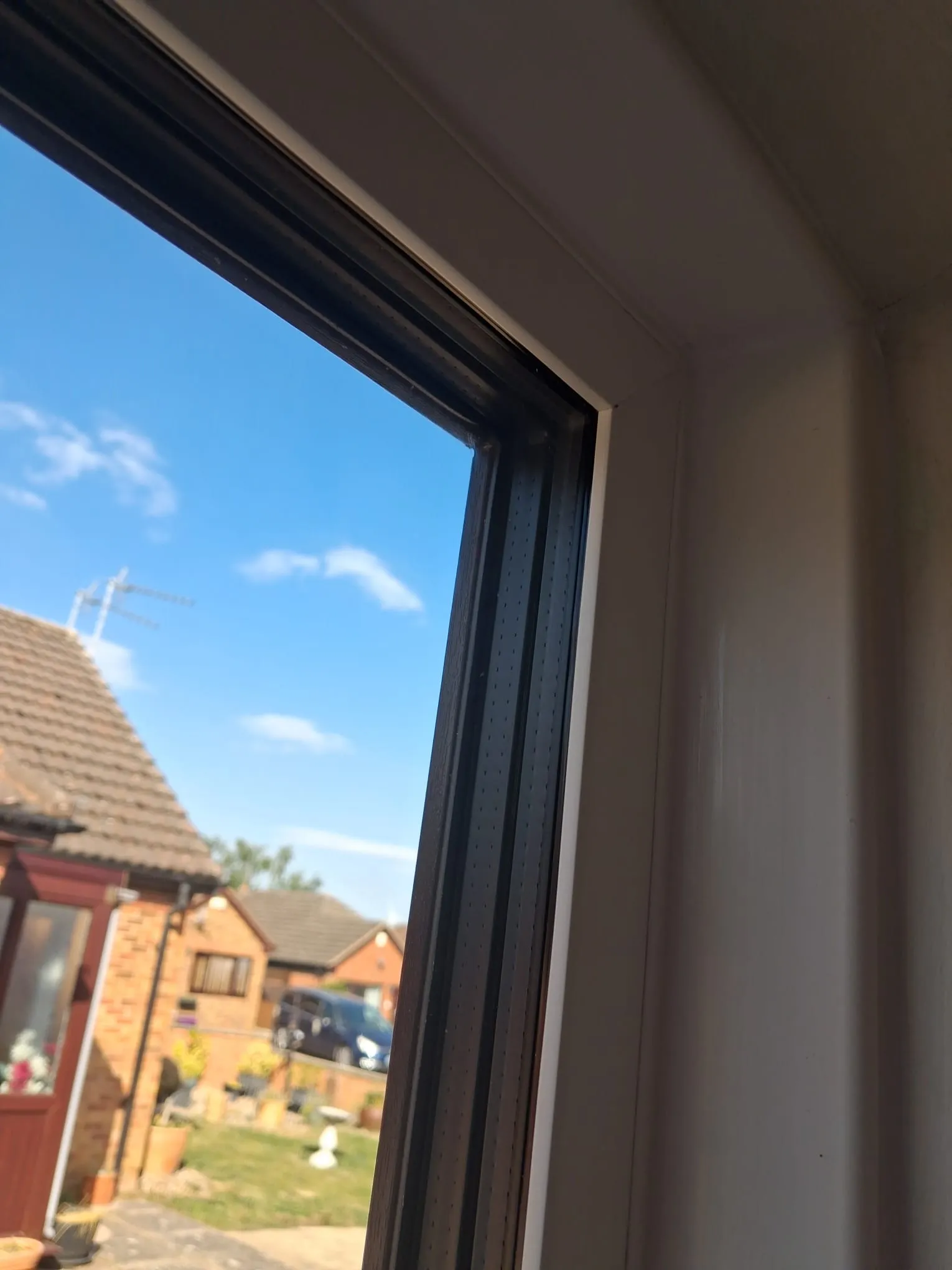
The glass makes up most of a window, so it has a big effect on warmth, noise, security and safety. The choices can sound confusing, but each type has a clear job. Here is what the main options do.
Low-emissivity (low-E) glass
A very thin, almost invisible coating on one pane reflects heat back into the room, so less escapes through the glass. This is standard on modern energy-efficient double glazing.
Gas fill and warm-edge spacers
The gap between the panes is usually filled with argon, which conducts heat more slowly than air. A warm-edge spacer bar around the edge of the unit reduces cold spots and helps prevent condensation at the edges.
Toughened glass
Toughened glass is heat-treated to be several times stronger than ordinary glass, and when it breaks it crumbles into small, blunt pieces rather than sharp shards. Building Regulations require safety glass in “critical locations”, such as in doors, beside doors and in low-level glazing.
Laminated glass
Two layers of glass bonded with a tough plastic interlayer. If it is hit, the glass cracks but stays in place. Laminated glass improves security and also reduces noise, making it a popular choice for ground-floor windows and busy roads.
Obscure and decorative glass
Frosted or patterned glass lets in light while hiding the view, which is ideal for bathrooms, front doors and side panels.
Solar control and self-cleaning
- Solar control glass reduces glare and heat build-up in south-facing rooms and conservatories.
- Self-cleaning glass has a coating that helps rain wash away dirt on outside panes.
Not sure what suits your home? Tell us how the room is used and which way it faces, and we will recommend the right combination.